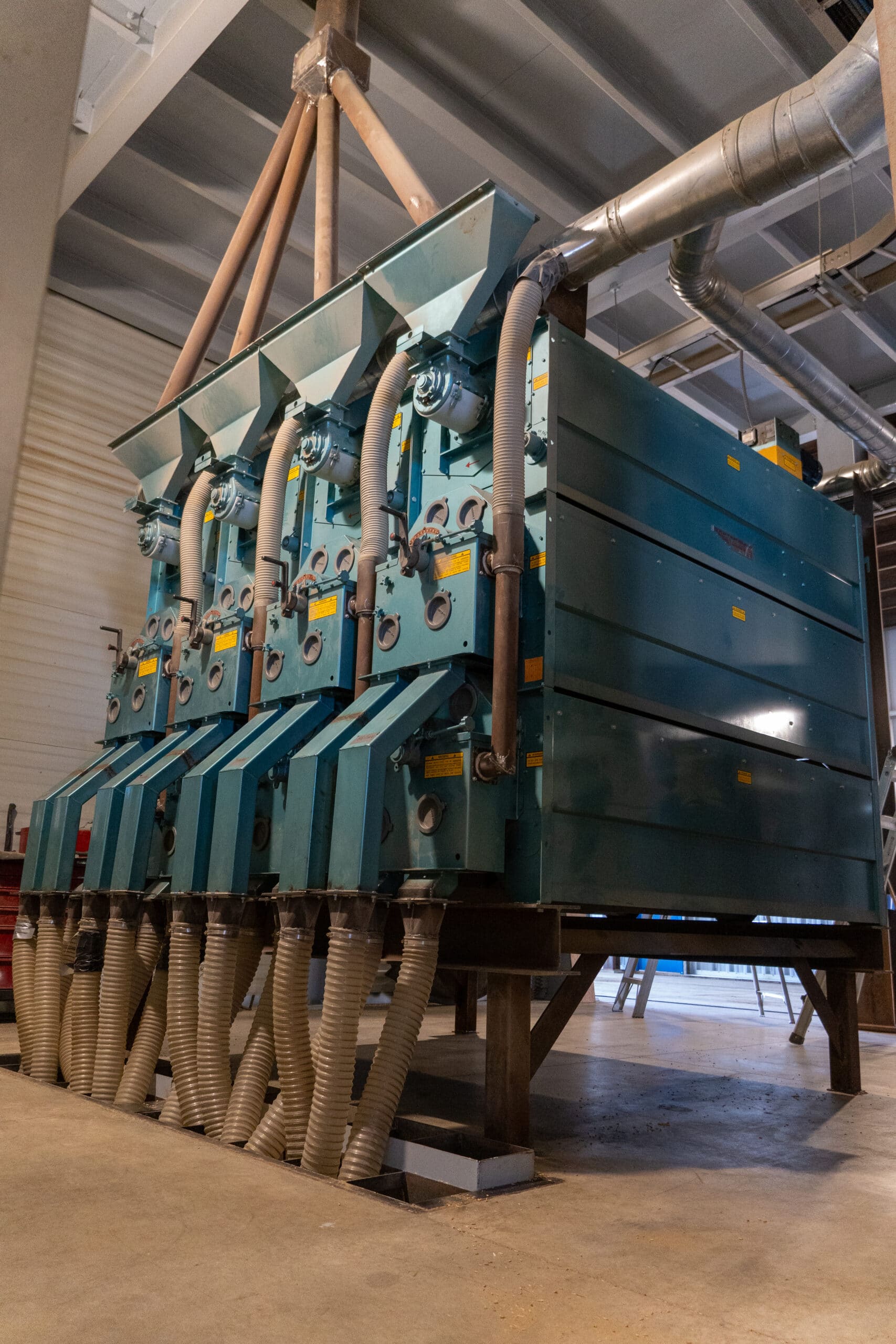
What is an indent separator?
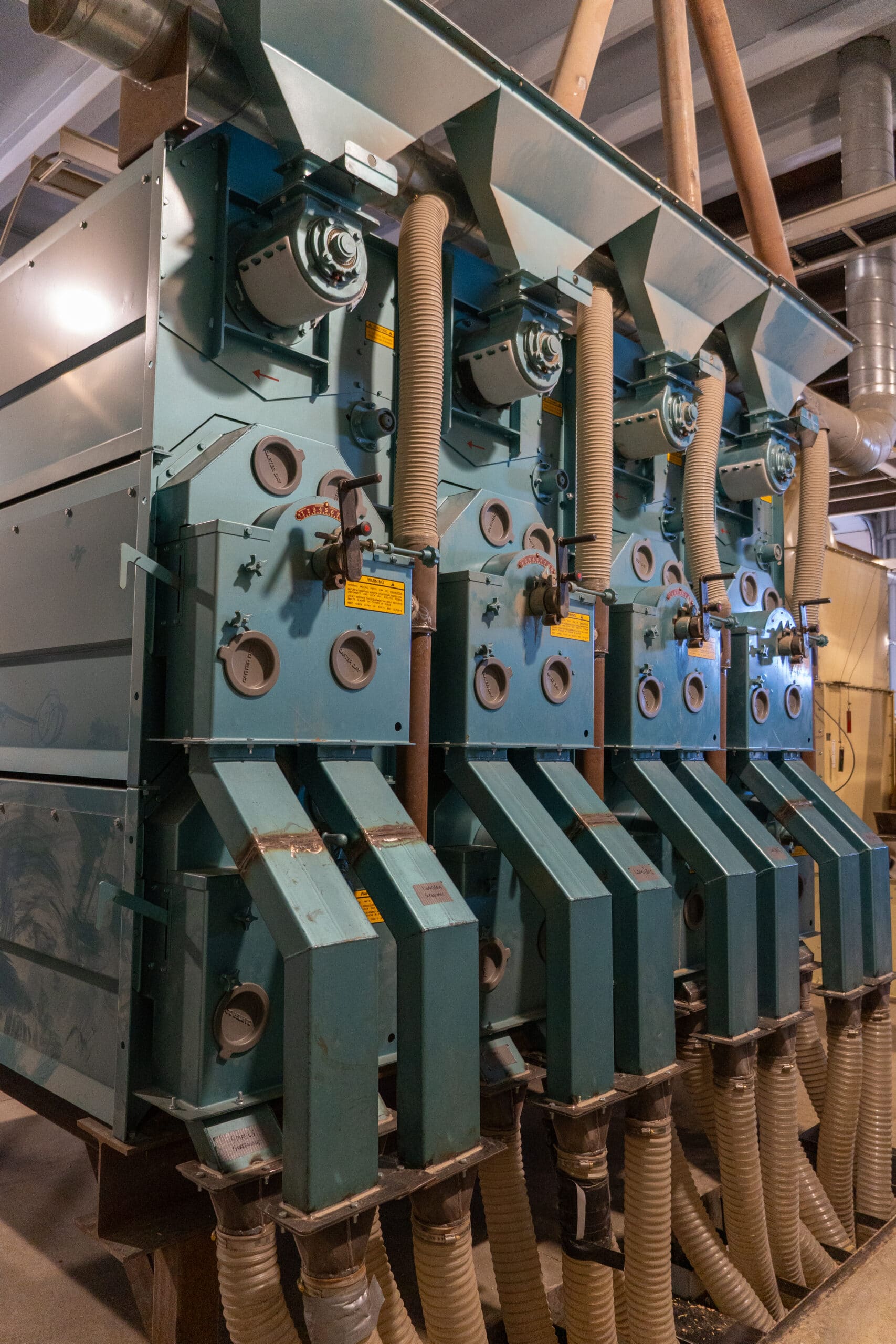
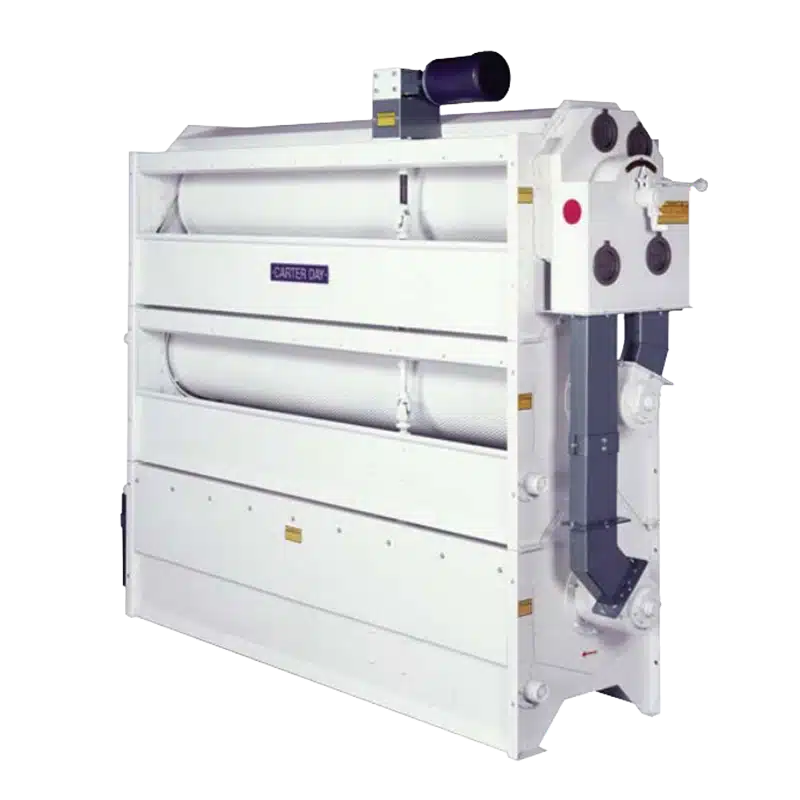
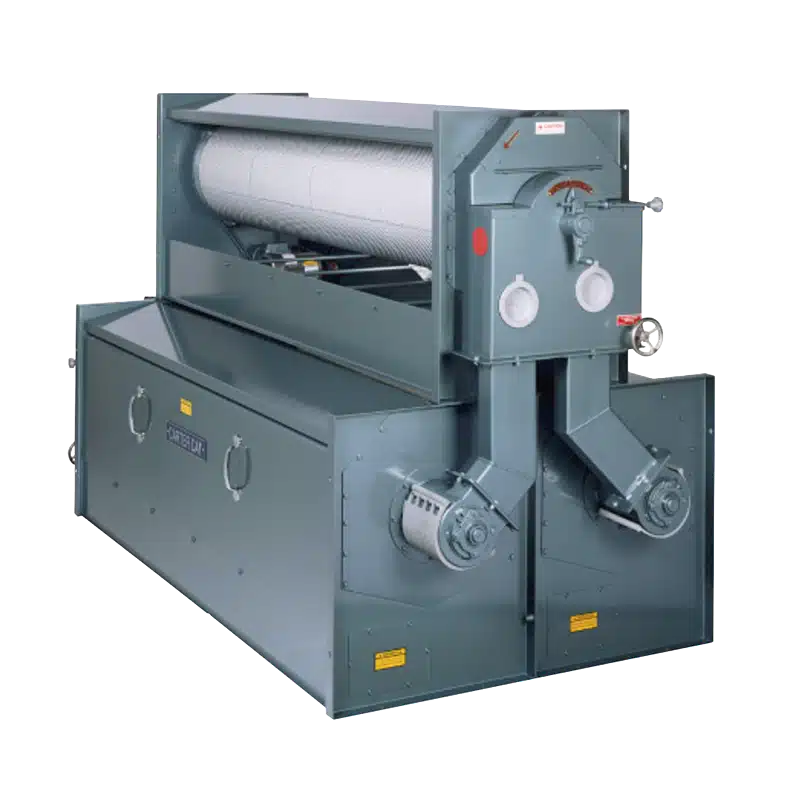
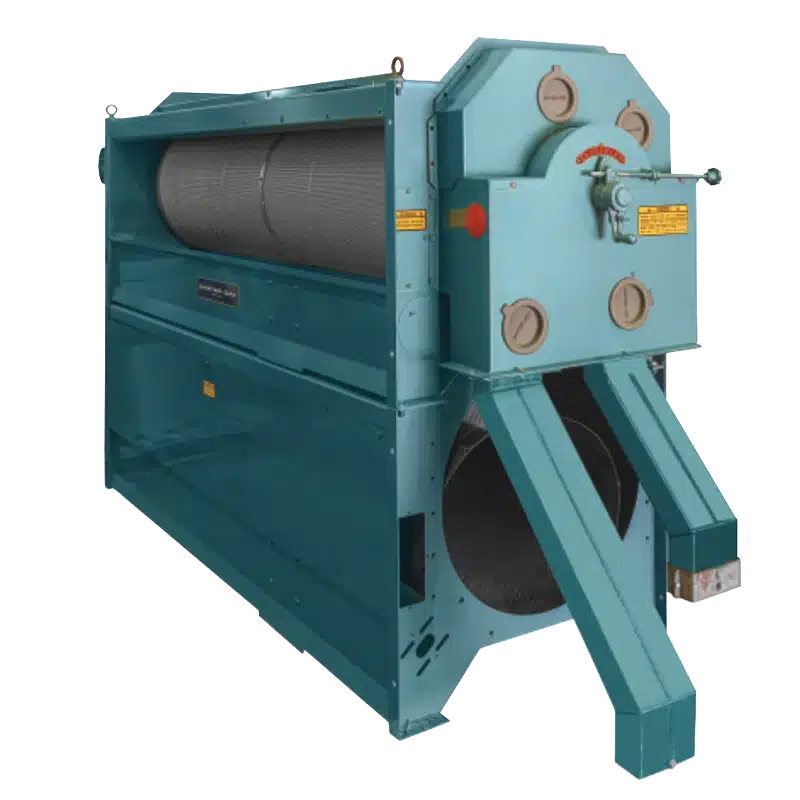
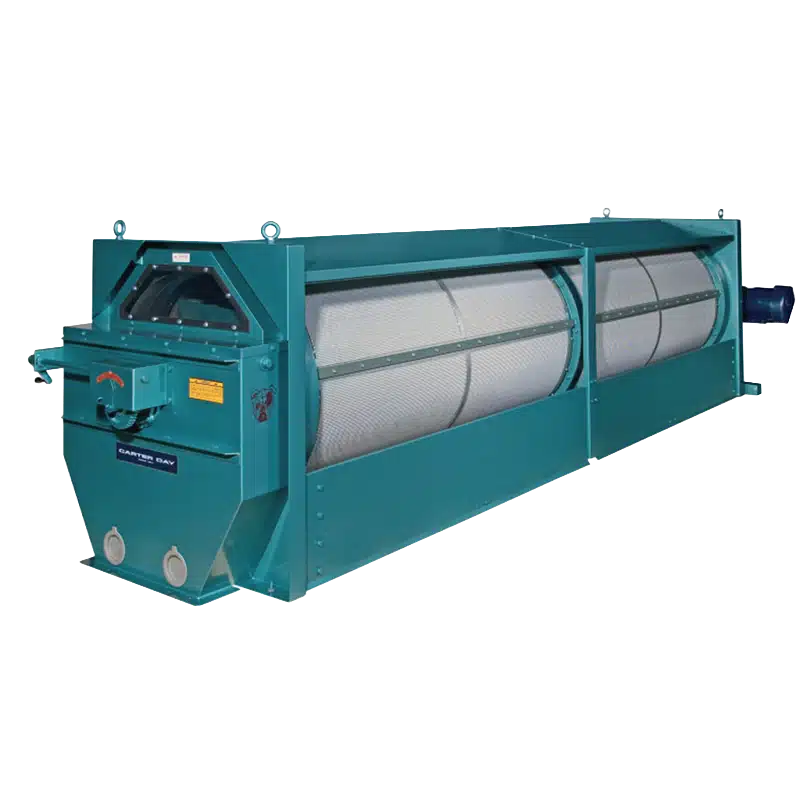
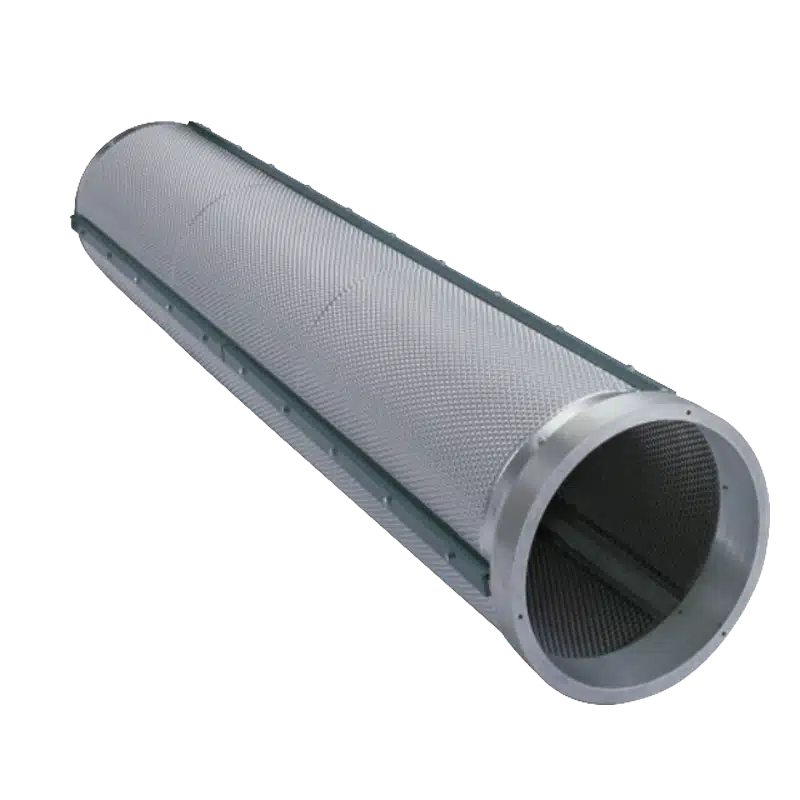
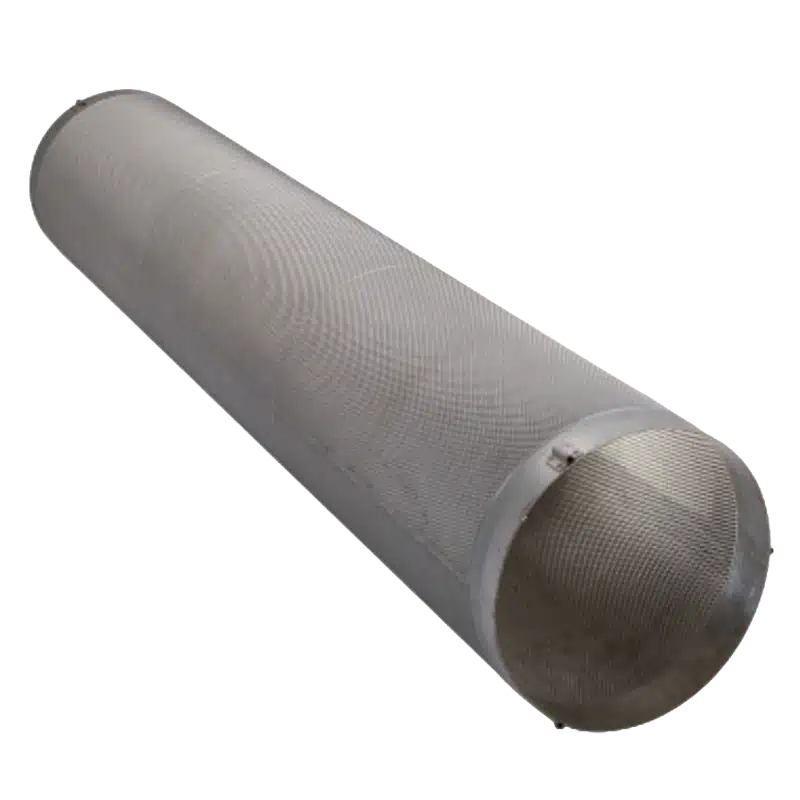
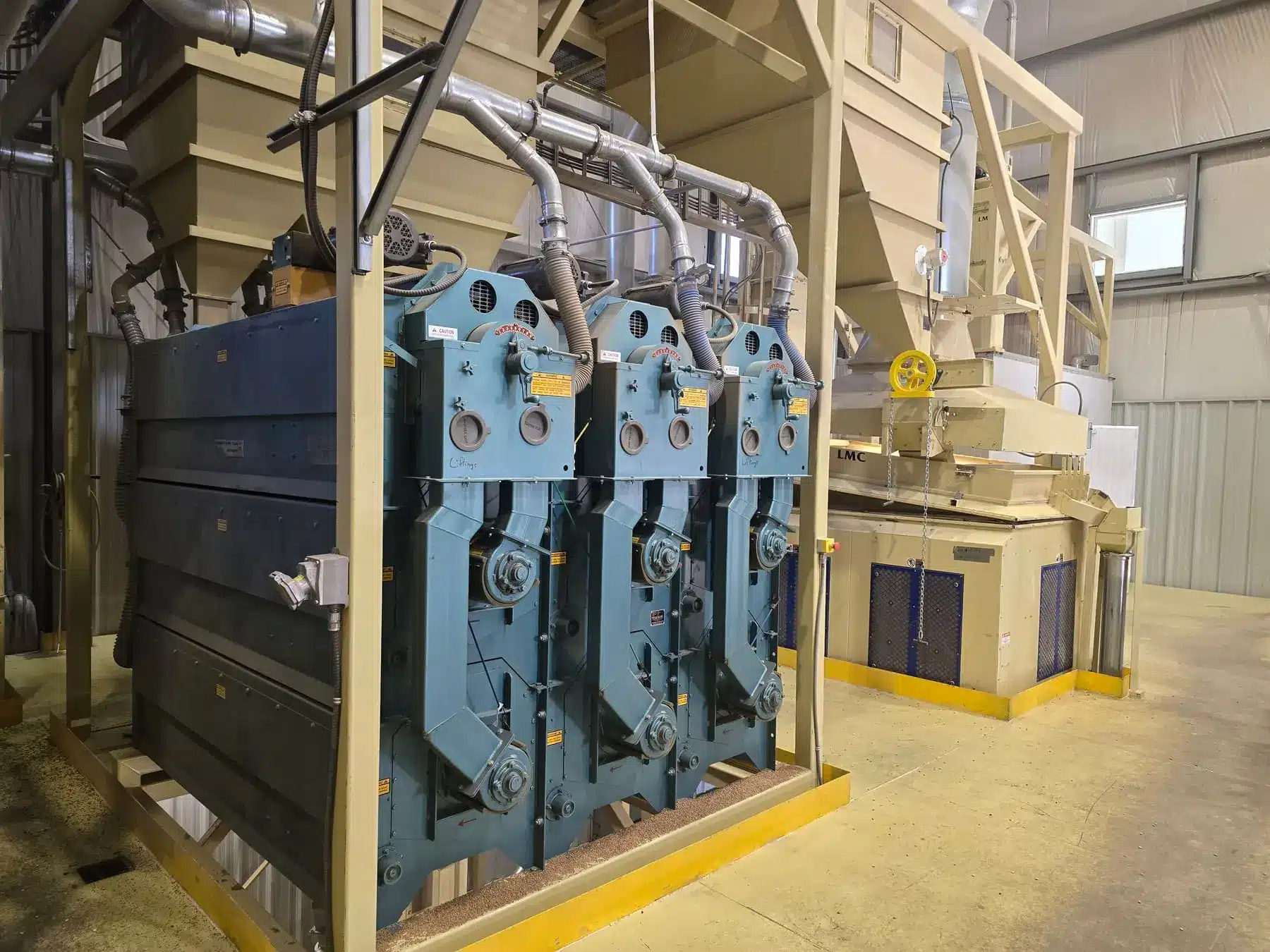
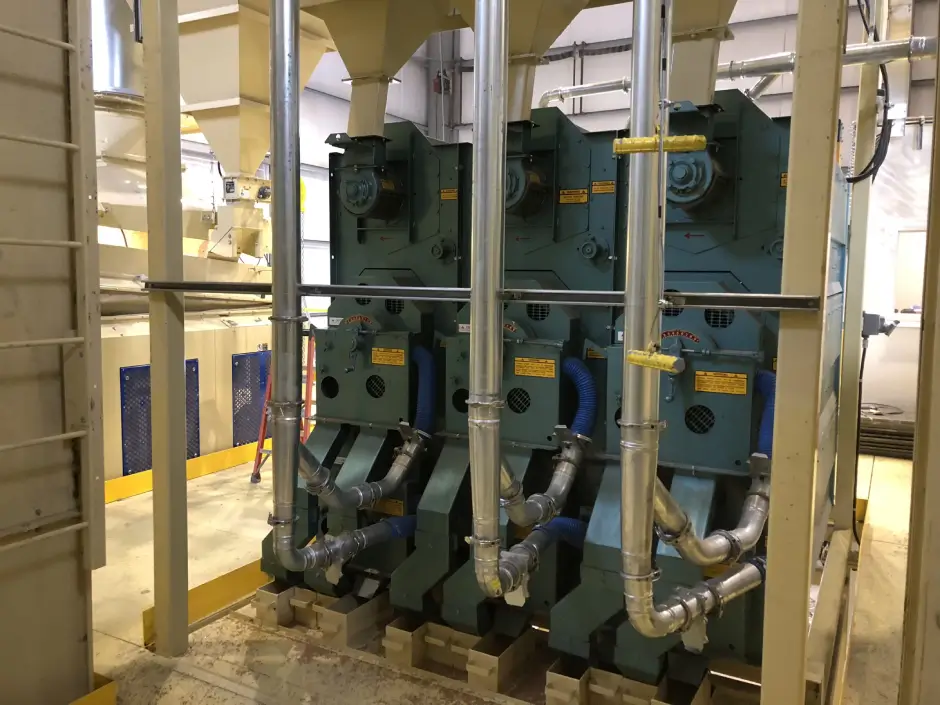
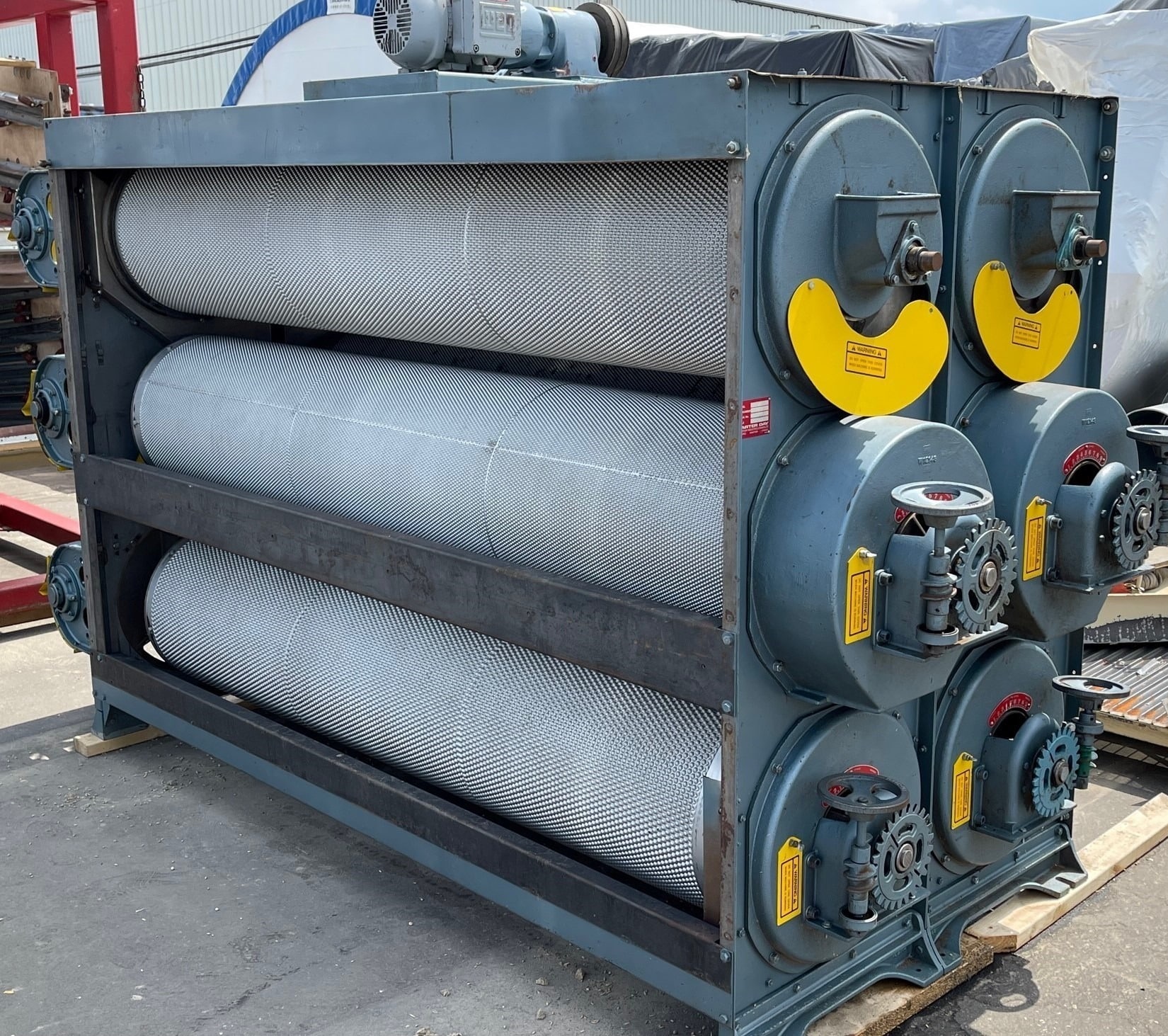
An indent separator, also called an indent cylinder separator or length grader, separates seed and grain by length. A rotating cylinder lined with small pockets lifts shorter kernels out of the grain mass while longer kernels tail out the end. It removes contaminants that are the same width and weight as the crop, such as wild oats in wheat, which screens and aspirators cannot separate.
How does a Carter Day Uniflow indent cylinder work?
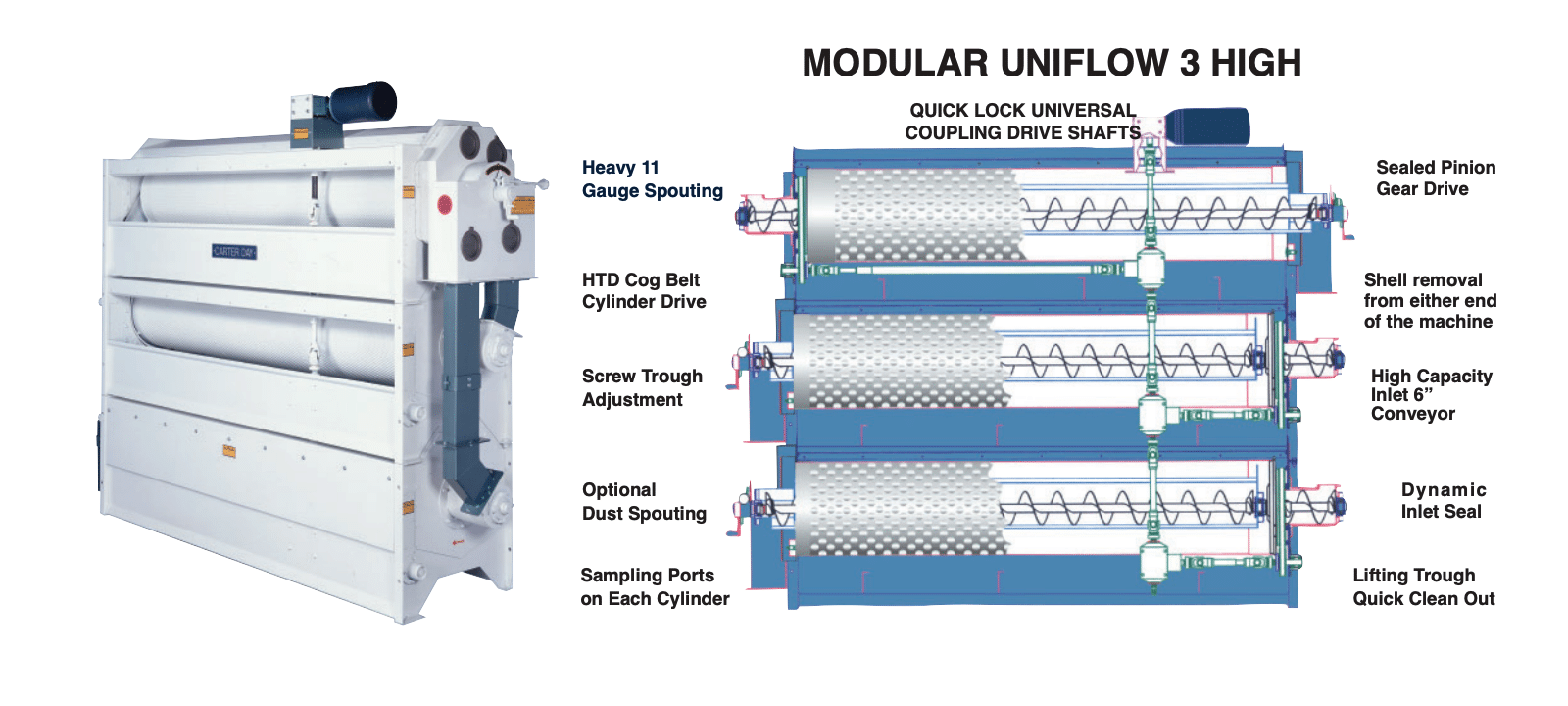
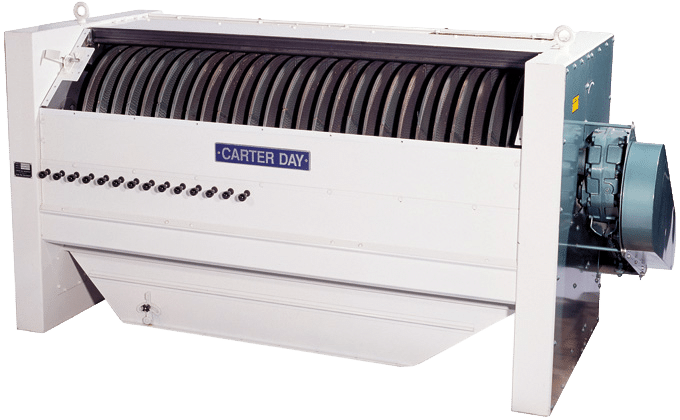
Grain enters one end of the rotating Uniflow cylinder. Short kernels seat into the indent pockets and are lifted until, just past the top of the rotation, gravity drops them into an adjustable trough. A screw conveyor carries these liftings out, while the long material tails out the other end. The operator controls the separation by adjusting the trough edge position and cylinder speed.
What is the difference between an indent cylinder and a disc separator?
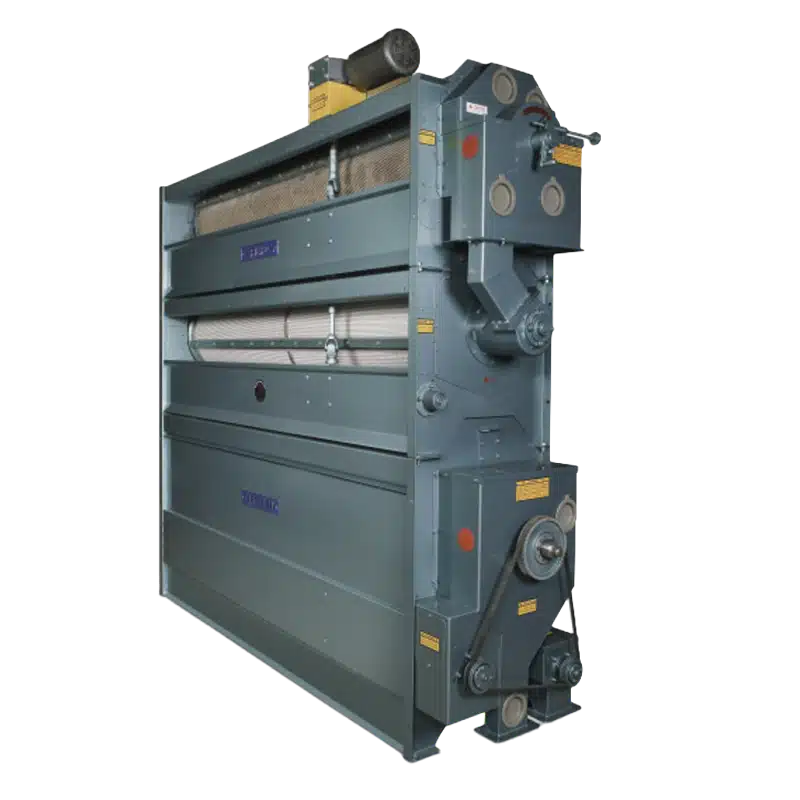
Both grade by length. An indent cylinder uses a rotating pocketed cylinder with an adjustable trough and is known for precise separations. A Disc Separator uses a series of pocketed cast discs on a horizontal shaft, and because different pocket styles can be fitted along the same shaft, it can make several length separations in one machine. Carter Day's Disc Cylinder Separator combines both to produce five separations in one pass.
Which Carter Day Uniflow model is right for my operation?
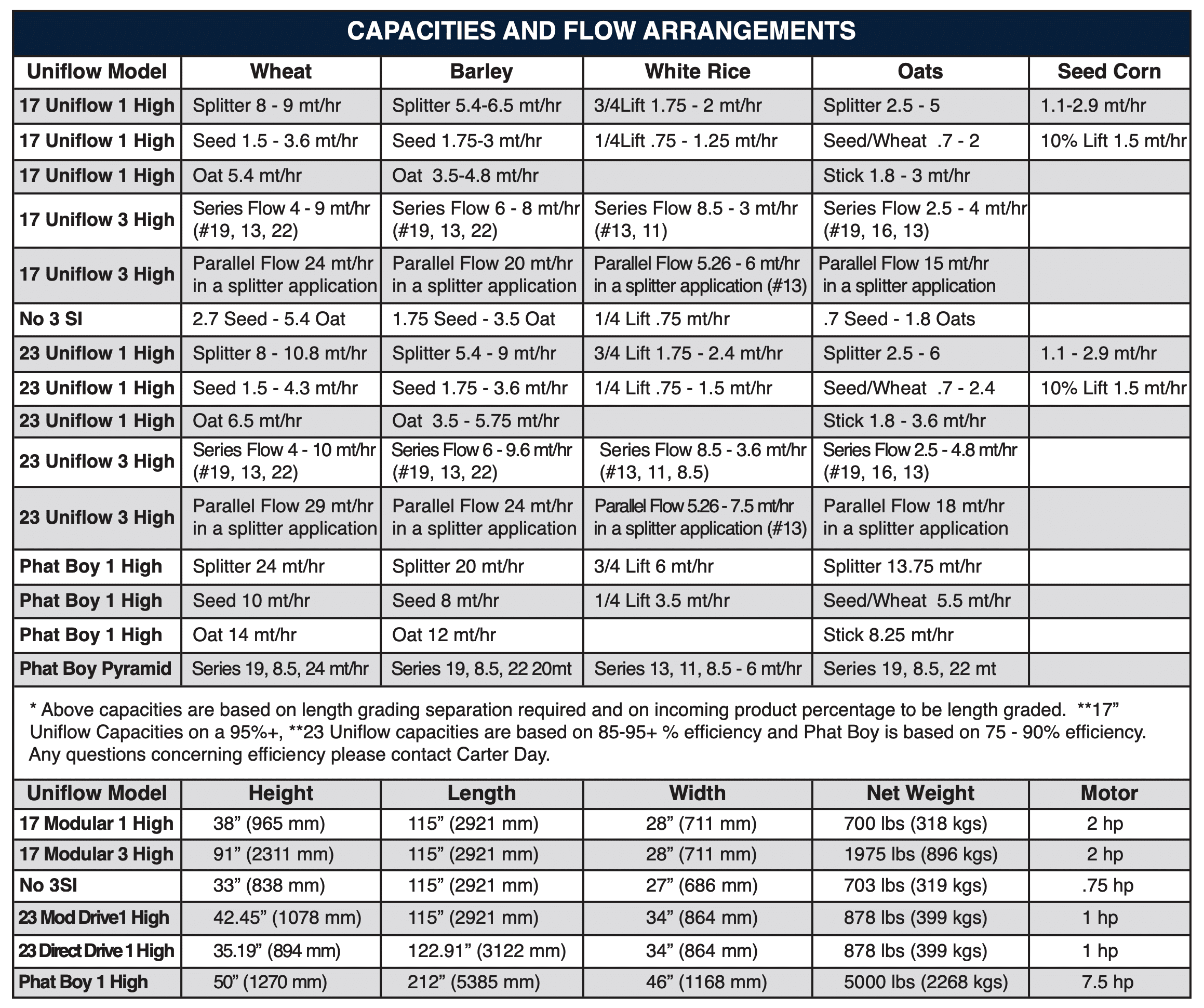
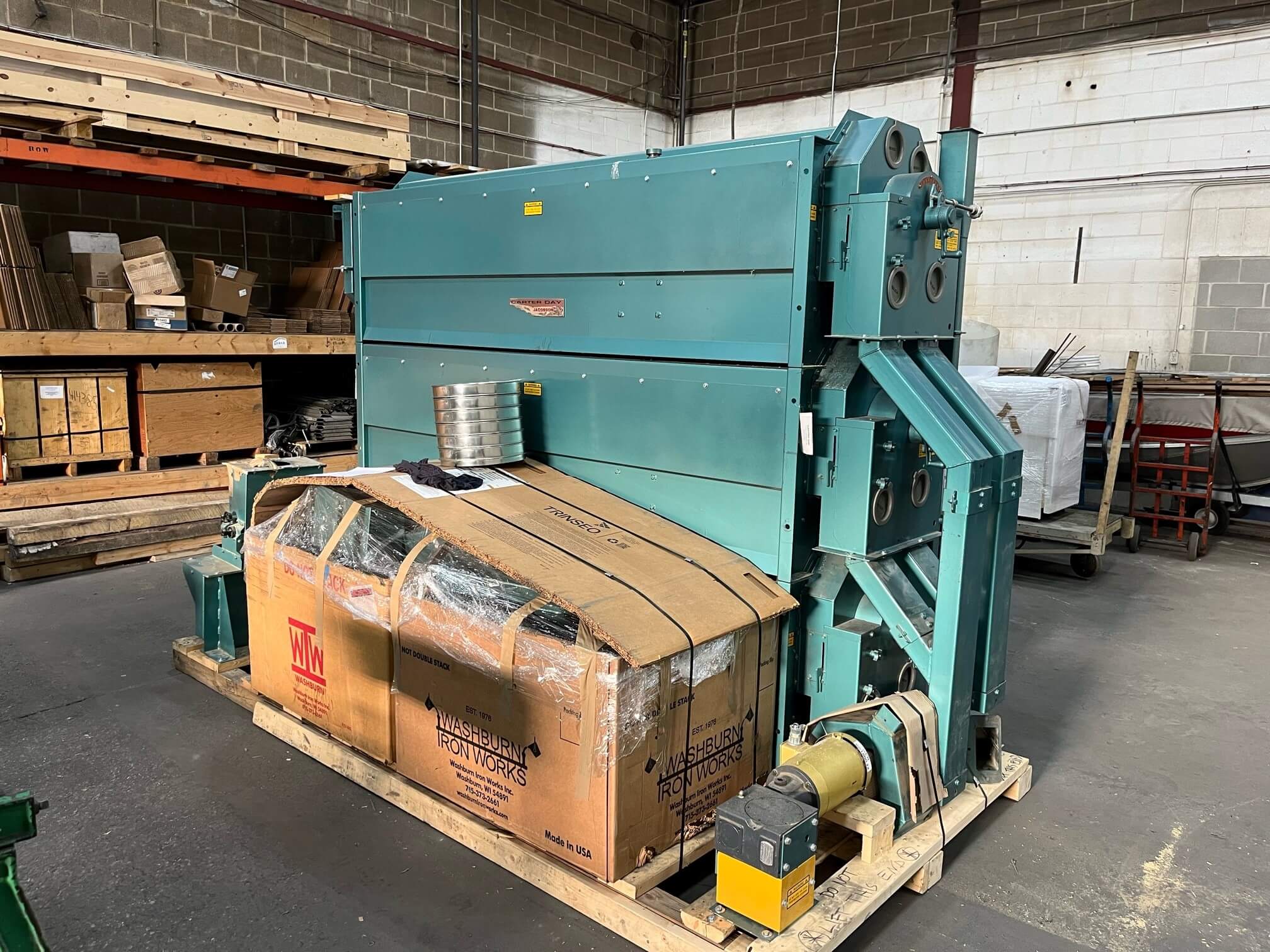
The Modular Uniflow suits 24-hour, high-capacity precision length grading where independent speed control is not needed. The No. 3SI is used for standard length grading where each cylinder's speed must be set independently. The 23 inch Uniflow can add capacity when run at a comparable speed, and the Phat Boy handles super high-capacity grading where maximum efficiency is not required or the length difference is extreme. Vistasort can recommend a model based on your crop and throughput.
What capacity can a Carter Day indent separator handle?
Capacity depends on the crop, the separation required, and how much of the incoming product must be length graded. As published by Carter Day, a 17 inch Uniflow 1-high handles about 8 to 9 metric tonnes per hour of wheat in a splitter application, and a 23 inch Uniflow stacked 3-high in parallel flow handles up to 29 metric tonnes per hour of wheat. Contact Vistasort for figures on your specific application.
What crops can an indent separator clean?
Carter Day length grading equipment is used across virtually all cereal grains, pulses, oilseeds, and other free-flowing granular materials, including wheat, barley, oats, canola, white rice, seed corn, and specialty seeds. Carter Day's urethane inlet seal was developed specifically for canola and small seed applications.
Do I still need a scalper or sizer if I have an indent separator?
Usually, yes. Each machine separates by a different property: scalpers and aspirators remove oversized material and light fines, sizers grade by width and thickness, and indent separators grade by length. Carter Day recommends pre-cleaning incoming product, and the Modular Combo Sizer can perform length and width grading in a single pass where both are needed.
Is Vistasort an authorized Carter Day dealer?
Yes. Vistasort is an authorized Carter Day dealer for Western Canada, and has been installing Carter Day equipment for more than 40 years. Customers can request a quote by calling 1-800-667-6924 or 306-242-9292, or by emailing steven@vistasort.com.
Where is Vistasort located, and what areas do you serve?
Vistasort is based at 835 58th Street East in Saskatoon, Saskatchewan, and has supplied seed and grain processing equipment since 1986. As an authorized Carter Day dealer for Western Canada, we serve processors across Saskatchewan, Alberta, and Manitoba. Call 1-800-667-6924 or 306-242-9292 to request a quote.