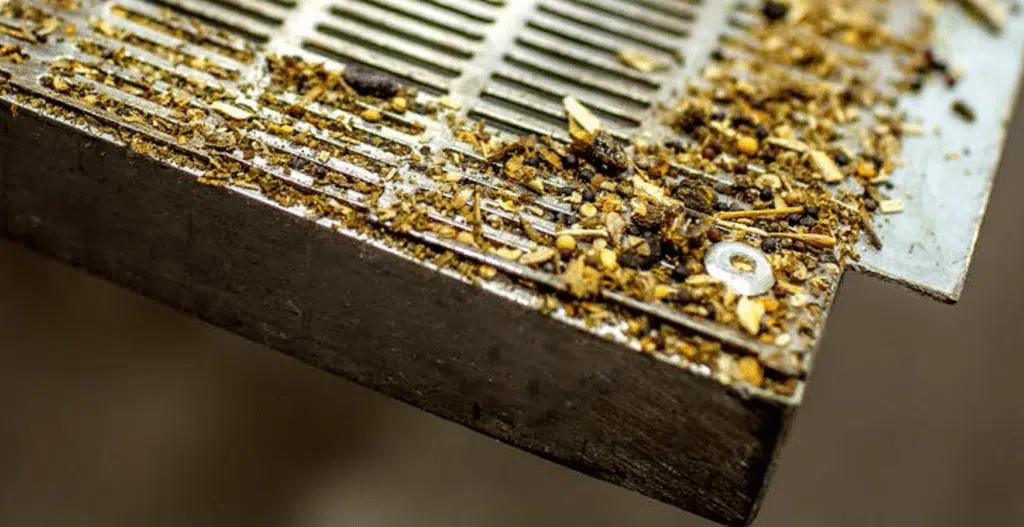
Vistasort supplies new and replacement seed cleaning screens for LMC, Clipper, Carter Day and most air screen cleaner brands: Border Series, perforated plate and wire mesh, in steel, stainless, aluminum and wood frames.
Seed cleaning screens are the perforated or wire mesh panels inside your air screen cleaner, the physical media that decide what passes through as clean product and what gets rejected as screenings. A top scalping screen removes oversized material: straw, pods, caked soil and large weed seeds. A bottom screen removes undersized material: broken kernels, small weed seeds and fine debris.
Everything the cleaner achieves depends on picking the right screen. If the opening is wrong for your crop, you lose yield, miss grade, or pass contamination that belongs in the screenings. With over 40 years of screen sizing experience, Vistasort helps Canadian processors choose the right screen for the right crop the first time, not after two bad production runs.
Vistasort stocks replacement seed cleaning screens for LMC, Clipper and Carter Day machines, the same brands we have supplied and supported since 1986. Tell us your machine model and frame dimensions and we will match a screen to fit.
Whether you are replacing worn screens, adding spare sets for more crops, or setting up a new or used cleaner, Vistasort matches screens to your machine's make, model and deck.
Replacement screens for Clipper air screen cleaners, from farm-scale machines to large commercial cleaners. Wood frames are the traditional choice on many Clipper machines, with steel and aluminum available.
Vistasort has been Western Canada's official LMC supplier for over 40 years, and we supply screens for LMC machines. On the LMC Advent Cleaner, screens mount on 24 in wide tubular steel frames and change in less than 20 minutes.
Pair your screens with an LMC aspirator to take light material out before screening.
As an Authorized Carter Day Dealer, Vistasort supplies replacement screens for Carter Day machines, matched to your model and frame. We also supply Carter Day indent separators and disc separators for length and shape separation after screening.
Running another brand? Send us the make, model and frame dimensions and we will match the screen. Buying a cleaner? See our new equipment in Saskatoon and cleaning and processing equipment, and we will set it up with screens for your crops.
Not all replacement seed cleaning screens are built the same. Every screen Vistasort supplies for your LMC, Clipper or other air screen cleaner comes with borders that cover the screen rails, built for product purity, full screen area and long service life.
Food safety. Bulk screen lets weeds and allergens lodge in the holes that sit over the screen rails. Borders cover those collection points and remove the chance of contamination.
Capacity. Seed stuck in a screen holds back the product flowing down it. The bigger the cleaner, the more screens you have to keep clean to hold capacity where it should be.
No wasted screen. Borders eliminate the half-holes between the bulk screen material and the frame rail, so you are not paying for screen area you cannot use.
Openings come in round hole, oblong slot, cross slot, triangle, double triangle and herringbone patterns. Round holes are the standard for most seed cleaning. Oblong slots retain elongated seeds like oats and sunflower. Triangle openings are used where shape-based separation is needed. We select the pattern based on your crop and the contaminant you are removing.
The frame holds the screen media and must fit the cleaner's deck precisely; a loose frame lets product bypass and causes vibration fatigue. Frames are made from selected straight-grained wood, top grade steel and aluminum, designed to fit a wide range of machines with a generous assortment of sizes.
Wire mesh screens use woven wire for precise openings, lighter and well suited to fine separations. Perforated plate is punched from sheet metal for more rigidity and durability, preferred for abrasive crops and high-tonnage throughput. Both come in the full range of openings Western Canadian crops need.
An iron-carbon alloy that is both malleable and flexible, for durable everyday frames.
Added alloys reduce air and water corrosion and increase hardness, for wet or food-grade lines.
Resists corrosion, stays strong in cold conditions and has an excellent strength to weight ratio.
Selected straight-grained wood, the traditional frame on many Clipper air screen cleaners.
Our brochure lists every round hole and oblong hole opening we supply, in 64ths of an inch with common equivalents, plus perforation patterns and frame materials.
Different crops need different grain cleaning screen setups. The table below outlines the main separation goal, common challenges and our general screen guidance for each crop. Contact us for exact openings; crop dimensions vary by variety and harvest year. See everything we help clean.
| Crop | Primary Separation Objective | Key Challenges | Screen Notes | Downstream Pairing |
|---|---|---|---|---|
 Red Lentils | Export grade sizing, multiple fractions | Stone contamination; broken or cracked lentils | Round hole bottom screen; sizing shaker for export grade fractions | Destoner Color Sorter |
 Green Lentils | Foreign material removal; grade sizing | Stones; damaged seed from harvest | Similar to red lentils, round holes; opening matched to variety size | Destoner Gravity Sep. |
 Yellow Peas | Scalp straw and pods; remove fine debris | High stone risk; large seed needs wider openings | Larger round openings; robust top scalping screen for heavy harvest trash | Destoner Bean Polisher |
 Navy Beans | Foreign material; broken bean removal | Splits and cracks are common; visual grade matters | Round holes; tight bottom screen to catch broken halves | Gravity Sep. Color Sorter |
 Beans (dry) | Scalping; foreign material removal | Variable seed size by variety; pod fragments | Confirm opening to variety size; pod-fragment scalping is critical | Destoner Color Sorter |
 Wheat | Weed seed removal; scalp straw and pods | Wild oats; ergot; frost-damaged kernels | Standard round hole wire mesh; ergot removal needs a gravity table and color sorter | Gravity Sep. Indent Sep. |
 Barley | Primary cleaning plus plumpness sizing for malt grade | Malt grade requires a kernel plumpness spec | Sizing shaker often needed downstream for plumpness fractions | Sizing Shaker Gravity Sep. |
 Oats | Scalp large chaff; remove thin oats | Long kernel; needs a slot-style opening | Oblong slot bottom screen to retain full oats; wide top scalping screen | Impact Huller Gravity Sep. |
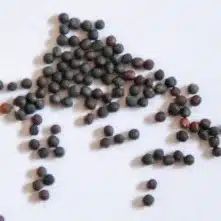 Canola | Remove fine weed seeds; scalp pods and stems | Very small round seed; fine wire mesh required | Fine wire mesh bottom screen; a small opening is critical to avoid losing canola | Gravity Sep. Color Sorter |
 Mustard | Remove foreign material from small round seed | Similar in size to weed seeds; precise separation needed | Fine wire mesh; similar profile to canola, ask us for the opening spec | Gravity Sep. Color Sorter |
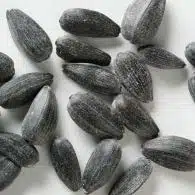 Sunflower | Scalp large debris; remove small foreign material | Elongated kernel; needs an oblong or slot-style opening | Oblong slot screens; wide top scalping screen for large seed | Impact Huller Gravity Sep. |
 Peanuts | Size grading; shell fragment removal | Large seed; shell fragments common; food-grade requirements | Large round or oblong openings; aluminum or stainless frames for food-grade lines | Destoner Color Sorter |
 Canary Seed | Foreign material removal; small seed retention | Very small seed; fine weed seeds in a similar size range | Fine wire mesh; a tight bottom screen is critical for this high-value crop | Gravity Sep. Color Sorter |
 Grass Seed | Weed seed separation; variety purity | Extremely fine seed; tight tolerances for certified seed lots | Very fine wire mesh; disc separator and spiral separator often needed | Disc Machine Spiral Sep. |
This table gives general guidance only. Screen openings vary by variety, harvest year and Canadian Grain Commission grade specifications. Contact Vistasort for crop-specific screen sizing before ordering.
Air screen cleaners are the first major separation step in every cleaning line, and the screens inside them decide how much work the machines downstream have to do. Getting your screens right reduces the load on gravity separators, color sorters and destoners.
Field-run product carries dust, chaff, stones and foreign material. An aspirator removes light material before the air screen cleaner, and a magnetic separator protects downstream equipment from ferrous metal.
Your screens do their work here, scalping oversized material on top and removing undersized material below while aspiration lifts off lightweight debris. Machines like Clipper cleaners and the LMC Advent Cleaner handle most of the cleaning load at this step.
Next, machines handle what screens and air cannot: density with a gravity separator, length with an indent separator, shape with a disc separator or spiral, and stones with a destoner.
The VistaSort optical color sorter is the final quality checkpoint, removing discoloured, damaged or foreign material that passed every earlier stage. Clean screen work upstream means the color sorter handles less and delivers higher purity.
Screen needs vary by crop group. Here is how Vistasort generally approaches screen selection for the four main Western Canadian crop categories.
Cereal lines focus on removing weed seeds, scalping straw and pods, and sizing for grade. Malt barley needs kernel plumpness sizing. See cereal cleaning.
Pulse lines need robust top scalping screens for heavy harvest trash and careful bottom screen sizing. Stones are common, so destoning follows screening. See beans and pulses.
Oilseed lines need fine wire mesh for small round seeds like canola and flax, and oblong slot screens for sunflower. Too large an opening loses valuable product. See specialty crops.
Grass and specialty seed need the finest wire mesh screens, and lots are often high-value certified seed with strict purity standards. See grass and forages.
Buying a replacement screen is simple. Buying the right replacement screen takes knowing how your crop's size and shape line up against the contaminants you are trying to remove, and that knowledge comes from running lines on real crops for four decades.
Steven Chivilo and Chris Hammel have been setting up air screen cleaners and selecting screens for Canadian seed cleaning operations since 1986. When you call Vistasort, you talk to people who have seen your separation problem before, across wheat, lentils, canola, peas, grass seed and specialty crops. Learn more about Vistasort.
Screens are stocked in Saskatoon, so you are not waiting on an international shipment. We supply processors across Canada, with our strongest presence in British Columbia, Alberta, Saskatchewan and Manitoba.
Tell us your machine model and the crop you are cleaning, and we will recommend the right screen, confirm what is in stock and get it to you without an international lead time.
Call +1-306-242-9292 | Toll-free +1-800-667-6924 | info@vistasort.com